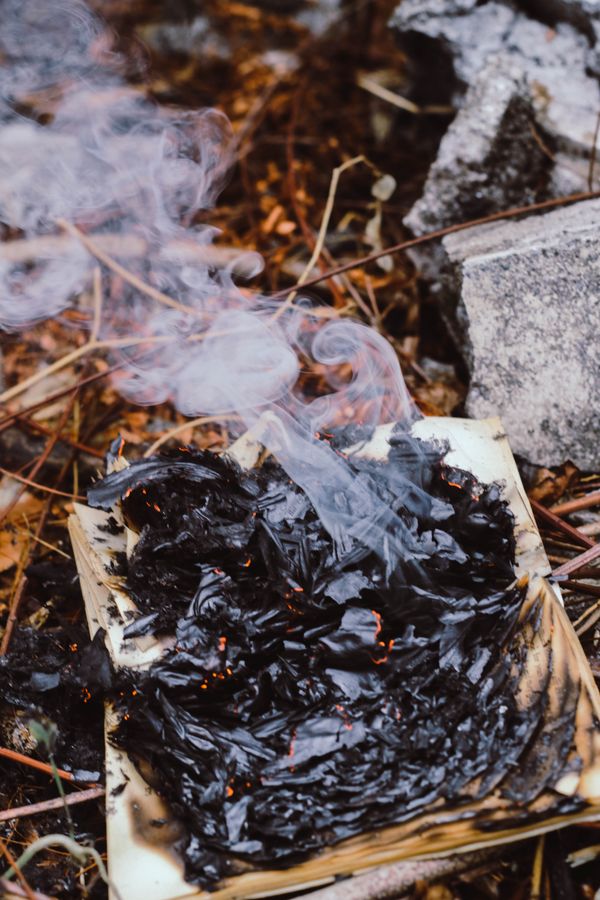
 Reaction to fire
Why your SBI result moved when the fixings changed
The mounting and fixing arrangement is part of the tested product. Change the substrate or the screw spacing and you have a different specimen.
4 June 2026CINDERHOLT tests construction products to their reaction-to-fire and fire resistance performance, and writes the classification report that goes with the result. We have run the furnaces at Templeborough since 1998.
Get in touch
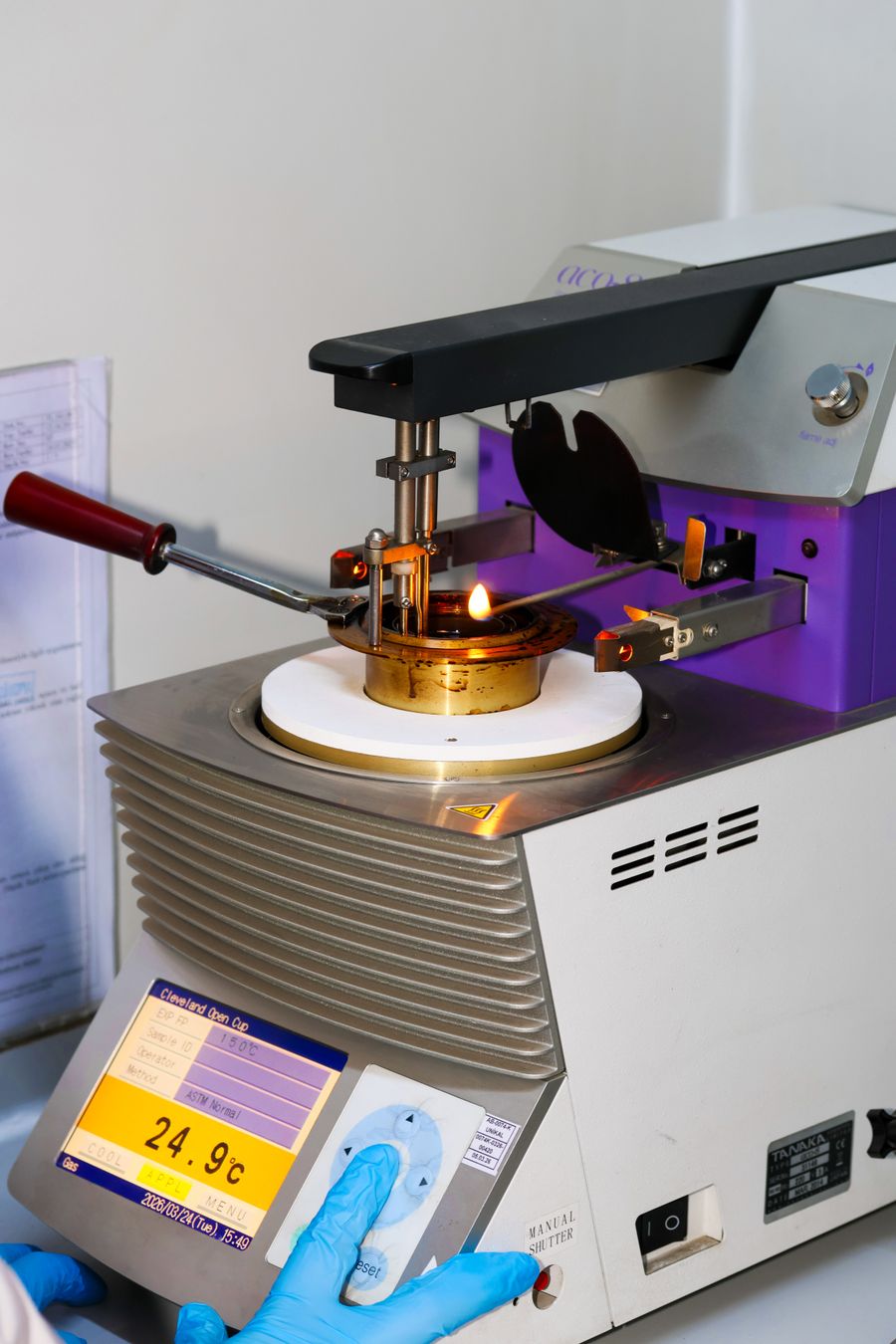
A 20 mm specimen is held in a furnace at 750 °C for 30 minutes while temperature rise, mass loss and sustained flaming are recorded. It is the gateway test for an A1 or A2 classification, and it is unforgiving — a product either survives it or it does not.
The corner test. Two wings of the product are mounted in an L-shape and exposed to a 30 kW sand-bed burner for 20 minutes while heat and smoke release are measured continuously. Most B, C and D classifications are decided here.
A small 20 mm flame applied to the edge or surface of a specimen for 15 or 30 seconds. Cheap, fast, and the test that most often catches a product before it reaches the expensive ones.
Oxygen consumption calorimetry at a set irradiance, usually 35 or 50 kW/m². It does not produce a European classification on its own, but it is the most useful development tool we run.
Bomb calorimetry to establish the potential heat content of a product. Paired with non-combustibility for A1 and A2 classifications, and run on each component of a composite separately.
Smoke accumulation in a closed chamber under radiant heat, with optional FTIR analysis of the gases produced. Required for rail and marine work far more often than for construction.
Loadbearing and non-loadbearing elements taken to the standard time-temperature curve in the large furnace. Integrity, insulation and, where relevant, loadbearing capacity are recorded to failure.
Full-scale cladding rig with a 3 MW timber crib in the combustion chamber. Nine metres of wall, instrumented, burned once. Nobody runs this test speculatively.
The document a specifier actually reads. We prepare classification reports from our own test data and, where the evidence supports it, extended application (EXAP) assessments.
Nine methods on our own schedule, run in our own halls. Nothing on this site is subcontracted without your written agreement.
Classification reports to BS EN 13501-1 prepared from our own data, with the field of application written in terms a specifier can apply.
A test engineer walks you through the result, including the parts that did not go your way. Development work goes better when the failure is understood.
Four notes on where fire test programmes go wrong, written for product developers rather than for other laboratories.
Reaction to fire
The mounting and fixing arrangement is part of the tested product. Change the substrate or the screw spacing and you have a different specimen.
4 June 2026 Classification
One is a pair of tests with no organic content to speak of. The other allows a defined heat contribution and adds the SBI.
19 April 2026 Reporting
The most common misuse of our reports is applying a result to a thickness, density or substrate that was never tested.
2 February 2026 Fire resistance
The full-scale rig costs more than every other test on our schedule combined. Six things to settle first.
11 November 2025Tell us the product and the classification you need to reach. If the route you have in mind will not get you there, we would rather say so before you pay for the test.
Submit an enquiryFor SBI, two wings measuring 1.5 m × 1.0 m and 1.5 m × 0.5 m, plus spares — in practice about 8 m². For non-combustibility and bomb calorimetry a few hundred grams is enough. We send a written specimen schedule with every quotation so nobody guesses.
We release the raw data as soon as the test is complete, usually the same day. The classification report follows within ten working days. What we will not do is give an informal opinion on a borderline result and then write something different in the report.
You get the data, the observations and the video. Most reformulation work then goes through the cone calorimeter, because it is a tenth of the cost of an SBI and tells you whether you have moved the needle before you commit to another full test.
No. We test and we classify. Certification is a separate activity carried out by a certification body, and a laboratory that does both has a conflict it cannot manage. Our classification reports are accepted by certification bodies as evidence, which is the correct relationship.